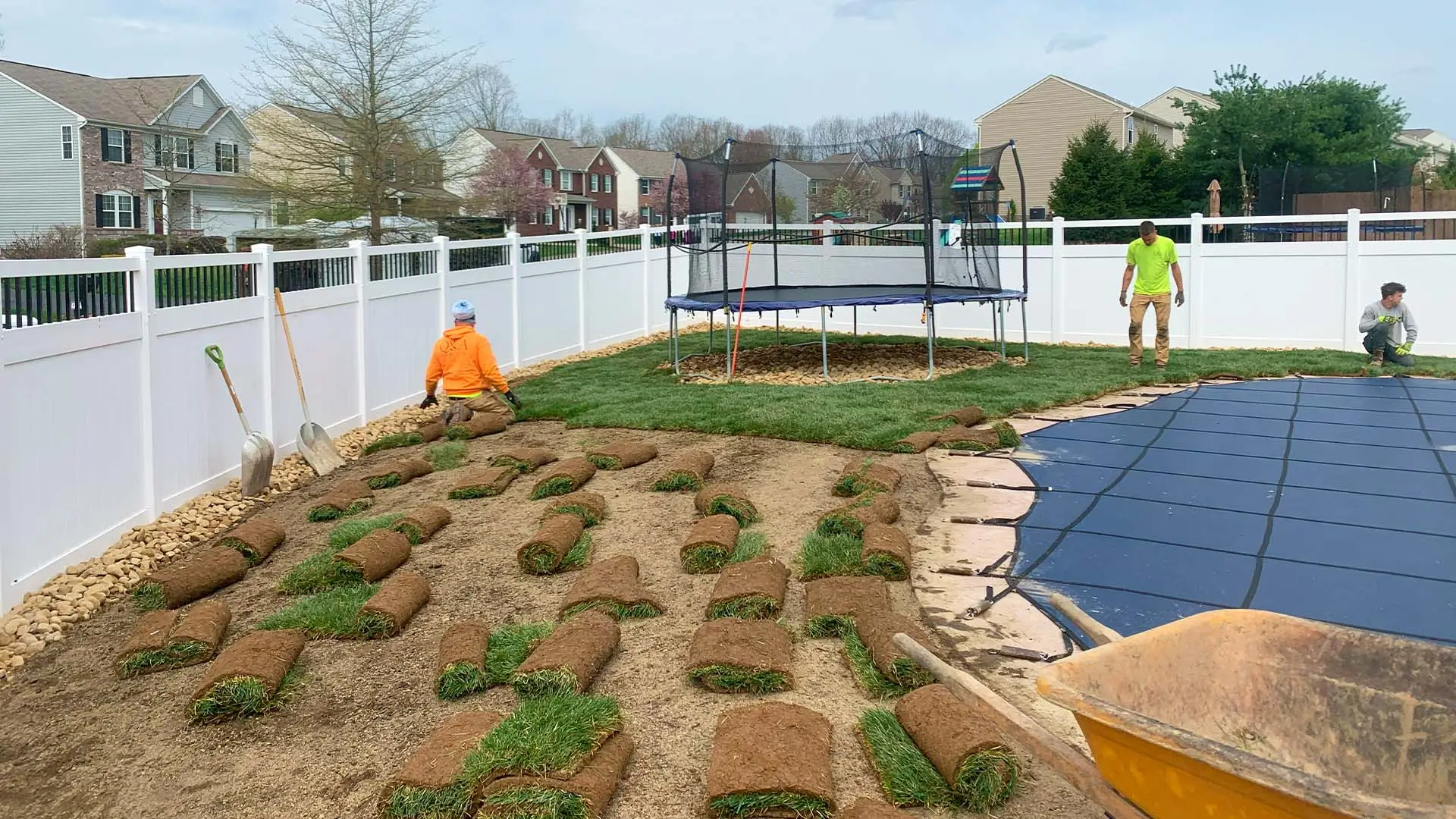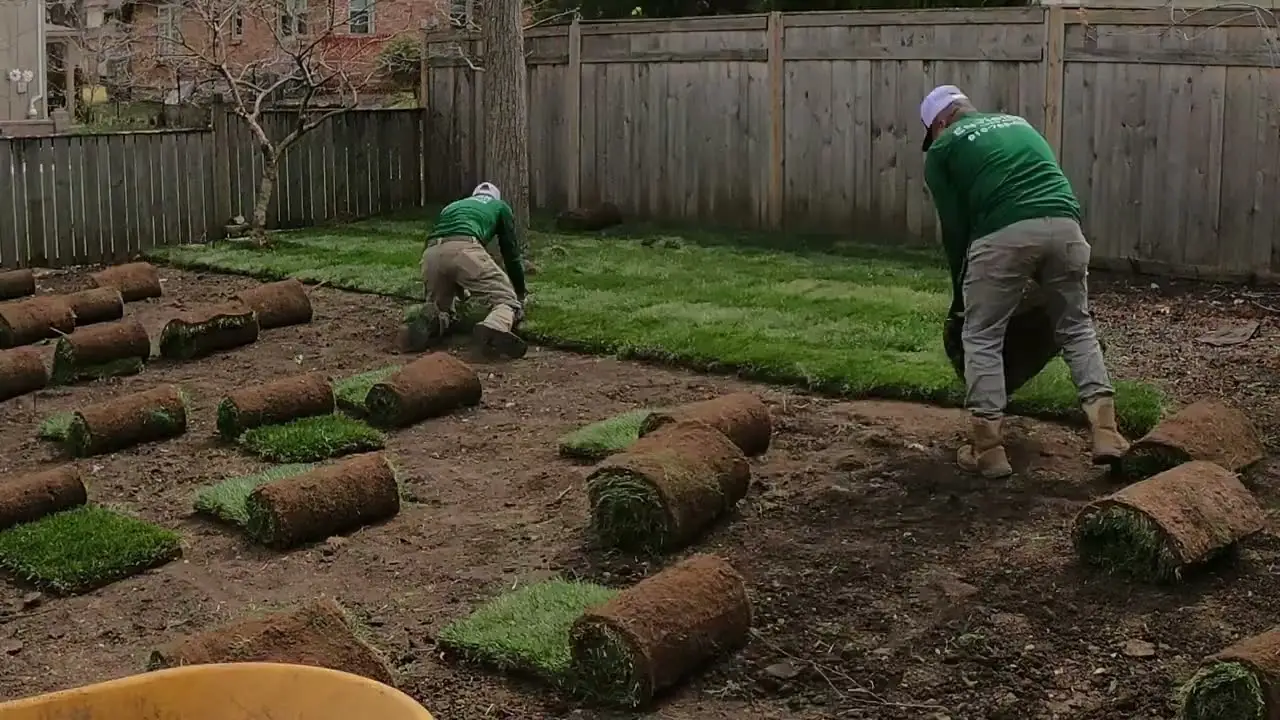
Summer sod installs are still very much viable for Kentucky bluegrass and fine fescue blends, but the margin for error is much smaller than in cooler months. Conditions that seem manageable in the morning can become stressful by midday, especially as soil surface temperatures climb quickly. Because of this, success is now determined less by the product itself and more by timing, sequencing, and follow-through.
The most important phase of any summer installation is no longer the install day—it is the first 10 to 14 days afterward. This is the window where roots either begin to anchor successfully into the soil or fail to establish properly. Turf that struggles later in the season is rarely the result of poor sod quality. More often, it is the result of inconsistent moisture, delayed irrigation after installation, or uneven watering during the early establishment period.
Water management has become one of the most critical adjustments in modern summer installs. Instead of heavy, infrequent watering, successful contractors are focusing on immediate irrigation after installation followed by consistent moisture during the first several days. The goal is not saturation, but stability. Once rooting begins, irrigation is gradually adjusted to deeper and less frequent cycles. When this transition is rushed or inconsistent, establishment issues tend to appear later as thinning or weak rooting.
Soil conditions are also playing a larger role in summer performance than many operators previously emphasized. High heat does not only stress turf above the surface; it also intensifies underlying soil issues. When pH balance or nutrient availability is off, turf struggles even more to recover from heat and traffic pressure. Because of this, mid-summer soil correction practices are becoming more common, as crews look for ways to improve root-zone efficiency during peak stress periods rather than waiting for fall recovery windows.
Another noticeable shift in 2026 is the way installation timing is being scheduled. Early morning installs are becoming the preferred standard for many contractors, not just for comfort, but because cooler surface temperatures improve establishment conditions and reduce stress on newly laid sod. Even logistics are changing, with tighter coordination between delivery and installation to minimize how long sod sits exposed on job sites during peak heat.
These operational adjustments are also influencing how contractors communicate expectations with clients. Summer installations now require clearer conversations about irrigation responsibility, site readiness, and environmental limitations during extreme heat. The focus has moved toward setting proper conditions for success upfront rather than addressing problems after the fact.
Despite the challenges, summer sod installation is not becoming less common. If anything, demand remains steady due to construction schedules and project timelines that continue year-round. What is changing is the level of precision required to achieve consistent results. In 2026, successful summer installs are defined less by avoiding heat and more by managing it correctly.
The difference between a struggling installation and a successful one is no longer the season. It is the system behind it.